Browse product types (7)
Select a type and provide the dimensions, specification and quantity with units. Additional types are enquiry candidates; supply scope must be confirmed before quotation. Materials, grades, finishes and applications are selection attributes, not additional types.
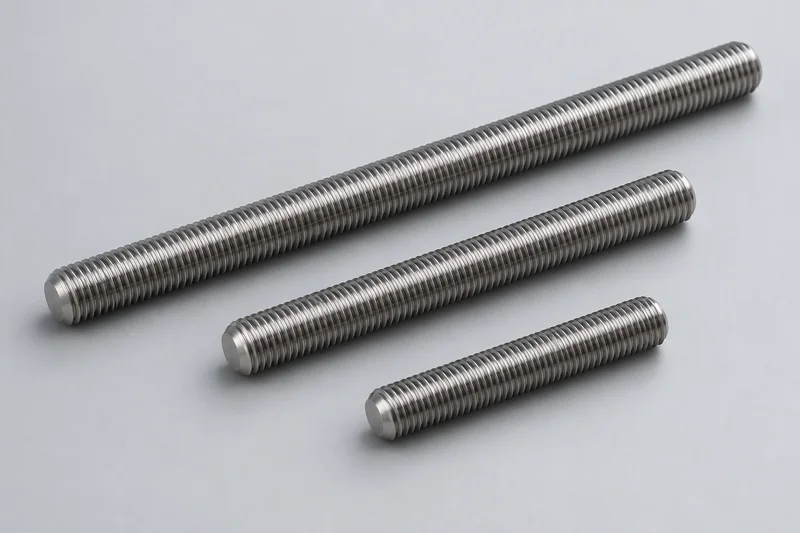
AI-generated appearance reference. Appearance reference; exact specification is confirmed for the order.
Fully threaded rods
Thread, stock or cut length, material and quantity.
Product detail available
View product details →AI-generated appearance reference. Appearance reference; exact specification is confirmed for the order.
Fully threaded studs
Finished piece length, thread ends, standard and quantity.
Cut-length all-thread detail available
View product details →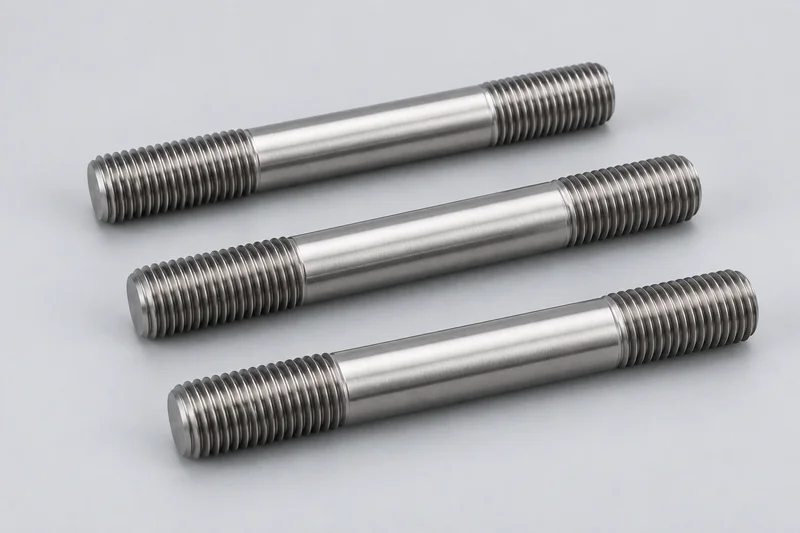
AI-generated appearance reference. Appearance reference; exact specification is confirmed for the order.
Double-ended studs
Thread length at each end, plain shank, overall length and quantity.
Product detail available
View product details →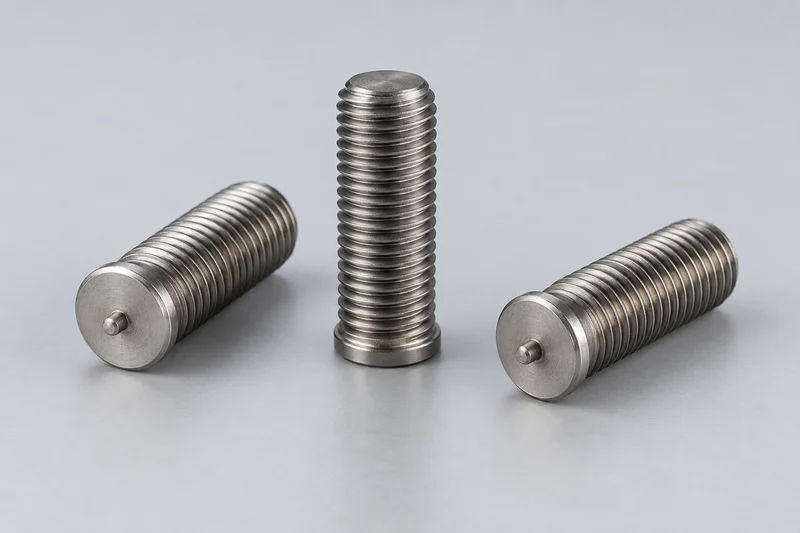
AI-generated appearance reference. Appearance reference; exact specification is confirmed for the order.
Threaded weld studs
Weld-end geometry, thread, process reference and quantity.
Product detail available
View product details →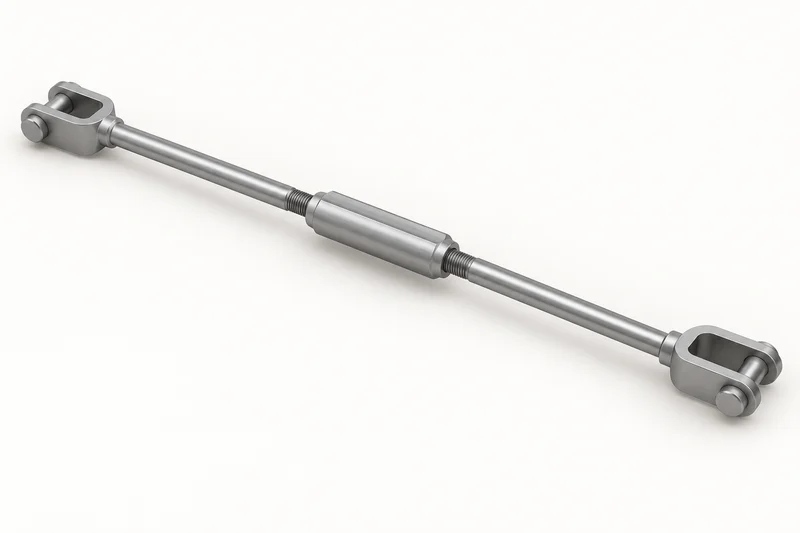
AI-generated appearance reference. Appearance reference; exact specification is confirmed for the order.
Tie rods and assemblies
Rod sections, end fittings, adjustment components and assembled drawing datums.
Product detail available; supply scope requires confirmation
View product details →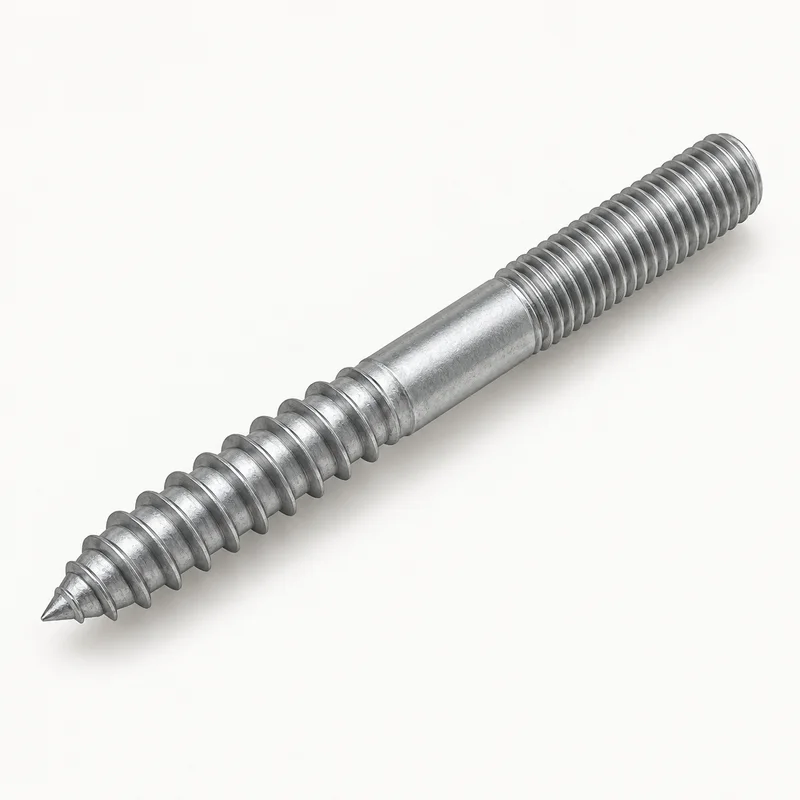
AI-generated appearance reference. Appearance reference; exact specification is confirmed for the order.
Hanger Bolts
Wood-thread and machine-thread hanger bolt enquiries, identifying both end interfaces, connection geometry and drawing-specific requirements.
Product detail available
View product details →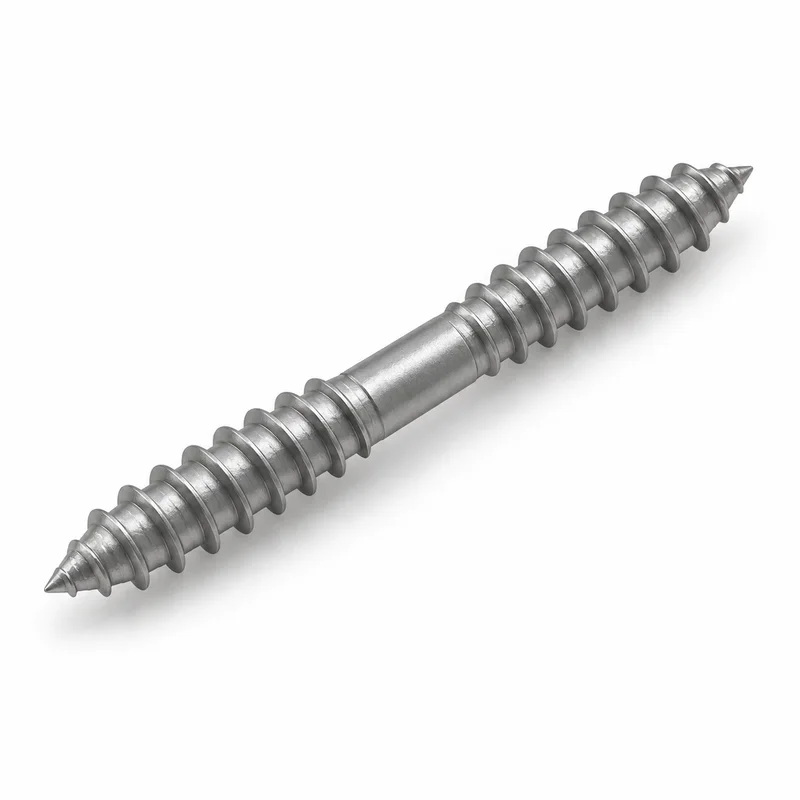
AI-generated appearance reference. Appearance reference; exact specification is confirmed for the order.
Wood-to-Wood Dowel Screws
Headless wood-to-wood dowel screw enquiries, defining wood-threaded ends, point and centre geometry, host materials and drawing-based joint requirements.
Product detail available
View product details →Explore stud and threaded-rod manufacturing processes
Start with the finished part: fully threaded stock, double-ended studs and drawing-defined end features need separate route reviews. Compare external-thread rolling for suitable blanks with machining of specified ends, shoulders or other drawing features. Define both ends and any plain centre independently; hanger bolts, dowel screws and weld-stud ends should not be treated as one all-thread construction.
Compare product, process and equipment routes →
These guides explain possible processes, not a confirmed production plan or welding procedure. Any treatment, finish and inspection scope remains part-specific; keep the finished-part requirements in your enquiry.
Studs & threaded rods product range
Fully threaded rods, double-ended studs, high-strength studs and weld-stud enquiries. FastenerBridge reviews standard and drawing-based enquiries against the exact part requirements, order quantity and destination.
Full-thread rods
State length, thread system, grade and straightness requirements.
Double-ended studs
Dimension both threaded ends and the plain shank.
Weld studs
Identify welding application, material and governing product specification.
Explore Studs & Threaded Rods
Choose a product to prepare its dimensions, material requirements and order brief.
Fully Threaded Rods
Headless full-thread rods quoted by the required length, thread system, material designation and finish. AI-generated appearance reference; not stock or engineering evidence.
View Product →Double-Ended Studs
Studs with separately defined threaded ends and a plain centre, specified through a controlled drawing or product reference.
AI-generated appearance reference; not stock or supply evidence.
View Product →Threaded Weld Studs
Threaded weld-stud enquiries tied to the defined stud form, welding process and approved connection requirements. AI-generated tip-ignition appearance reference; not every weld-stud form, stock or welding evidence.
View Product →Tie Rods and Assemblies
Drawing-defined tension tie-rod enquiries identifying rod sections, end fittings, adjustment components and assembled length datums.
AI-generated family reference; not supply or capacity evidence.
View Product →Information needed for a quotation
Provide thread, overall and threaded lengths, grade, straightness and finish requirements.
| Requirement | What to provide |
|---|---|
| Product reference | Exact standard and revision, part number or controlled drawing |
| Dimensions | Diameter, length, thread and relevant tolerances |
| Material / grade | Required material designation and mechanical properties |
| Finish | Coating or surface requirements, where applicable |
| Quantity | Order quantity and unit: pieces, sets or length |
| Delivery | Country, requested shipping terms and packaging |
| Inspection | Tests, reports and traceability required by the order |
Rod and stud enquiry examples
Copy the relevant outline and fill it with your specification. These are unfilled ordering examples, not available size ranges or connection-design instructions. Mark unresolved requirements as “to confirm” and retain the selected drawing’s length definitions.
Fully threaded rod / cut-length all-thread brief
- Selected standard and edition, part reference or drawing number / revision: ___; long rod or finished cut-length all-thread piece: ___.
- Thread system and designation: ___; diameter and pitch or threads per inch: ___; thread hand and tolerance designation: ___.
- Overall finished length and units: ___; length tolerance: ___; end chamfers, cut-face or other specified end details: ___; straightness requirement, if specified: ___.
- Material designation: ___; required mechanical designation: ___; finish: ___; mating nut / component thread specification or drawing: ___.
- Quantity: ___; unit: ___; for a length-based request, required piece lengths and piece count: ___; attachment filenames / revisions: ___; inspection documents and open items: ___.
Review threaded rods and cut-length all-thread forms →
Double-ended stud brief
- Selected reference / edition or drawing number / revision: ___; drawing labels for end A and end B: ___; tap end and nut end identified where applicable: ___.
- End A thread designation, hand, fit and specified thread length: ___; end B thread designation, hand, fit and specified thread length: ___; retain each end’s drawing labels rather than assuming they are identical.
- Total physical length: ___; any separate catalogue designation length and its datum: ___; centre-shank diameter and length: ___; units, tolerances, run-out and end details from the drawing: ___.
- Material / mechanical designation: ___; finish: ___; mating threaded components and the specified tap-end fit, where applicable: ___; requirements awaiting confirmation: ___.
- Quantity and unit: ___; drawing / specification attachment filenames and revisions: ___; required inspection documents: ___; other open items: ___.
Review double-ended geometry, length datums and end-fit distinctions →
Do not infer required thread engagement, installation torque or connection capacity from a product name or approximate end-length family. The examples collect the selected requirements; they do not approve an assembly or substitute one thread fit for another.
Order review
MOQ, production timing, available finishes and inspection scope depend on the final specification. We confirm these details in the quotation rather than applying one claim to every product.
Product illustrations identify a family; they are not a dimensioned drawing, certification or working-load rating.
Related specification guides
Rod and stud selection map
Use the existing detail for each construction. The reference names below are identification contexts discussed in those pages, not an equivalence table or a statement that every pattern meets a standard.
| Construction / detail | Reference / form distinction | Critical interface |
|---|---|---|
| Fully threaded rod Rod detail | Long all-thread form; DIN 975 is a legacy catalogue term, not a universal current specification. | Overall length, thread pitch/hand and end condition. |
| Fully threaded stud Stud detail | Cut-length all-thread part; no intentionally plain middle section. | Part length and ends, not only a rod length or material name. |
| Double-ended stud Double-ended detail | Two threaded ends with a defined middle; DIN 938 / 939 / 835 / 940 are separate reference patterns. | Identify each end independently, including tap-end fit and usable threaded length. |
| Threaded weld stud Weld-stud detail | A welding-end structure, not an ordinary rod welded by assumption; ISO 13918 reference context. | Selected stud form, welding-end profile, method and mating base material. |
Choose the thread system, dimensions and material/property/finish independently. A matching nominal diameter does not establish a matching head, fit, bearing face or complete assembly.
The fully threaded stud entry deliberately reuses the cut-length all-thread content in the rod detail; it is not a duplicate standard-model page. DIN 976-1 publisher identity and ISO 13918 publisher identity identify different product contexts.
Tr and ACME transmission-thread scope
A screw used to move a mating nut needs a defined transmission-thread system and assembly specification. It is not an ordinary fastening rod selected only by nominal diameter. This section explains enquiry boundaries; it does not add a lead-screw product range or confirm supply of transmission screws, nuts or complete motion assemblies.
| Thread context | What must be identified |
|---|---|
| Metric trapezoidal Tr | Selected metric trapezoidal designation, applicable standard part and edition, pitch, lead, number of starts, hand and fit requirements. DIN 103-1 identifies the profile context; a profile reference alone does not specify a finished assembly. |
| ACME | Exact ACME designation and selected specification, units, pitch or threads per inch, lead, starts, hand and mating thread class. ASME B1.5 distinguishes general-purpose and centralizing applications; retain the chosen application and class. |
| Ordinary fastening rod | Use the specified fastening-thread system and mating fastener requirements. A similar nominal diameter does not make metric Tr, ACME, metric fastening or unified inch threads interchangeable. |
Pitch, lead and mating-component brief
Record pitch and lead separately, together with the number of starts and thread hand. Lead describes axial travel for one revolution; do not treat pitch as the travel specification without identifying the thread construction. Provide the matching nut reference or controlled drawing, not an assumed generic nut substitution.
- Selected thread designation, standard / edition or drawing / revision: ___; units: ___; diameter: ___; pitch or threads per inch: ___; lead: ___; starts: ___; hand: ___; required fit / class: ___.
- Overall and usable threaded lengths with drawing datums: ___; end machining and support interfaces: ___; mating nut or assembly drawing: ___; material, surface and inspection requirements: ___.
- Application, operating requirements and unresolved items for separate engineering review: ___; quantity and unit: ___; supplied document filenames / revisions: ___.
Do not infer load capacity, drive torque, speed, positioning accuracy, life, backlash or self-locking from the thread name or an illustration. These require the selected assembly and operating conditions. The existing rod and stud images on this page are family appearance references, not Tr or ACME profile drawings or proof of transmission-screw supply. Any such enquiry remains subject to drawing and supply-scope confirmation before quotation.
Review the existing thread specification checklist · Prepare a controlled custom-part drawing
Transmission-thread reference sources
- DIN 103-1:1977-04 publisher profile identity
- ASME B1.5-1997 (R2024) ACME scope
- Thomson original diameter and lead selection context
These references explain identification and selection contexts, not FastenerBridge compliance, inventory, manufacturer affiliation or approved interchangeability. Use the selected specification and controlled drawing for the actual enquiry.