Temperature, tooling and finished geometry are separate decisions
Hot forging concerns heated stock; closed-die or impression-die forming concerns the shaped tooling that controls the component geometry. These descriptions do not select a machine, material grade or finished-part specification by themselves. Start with the controlled drawing and identify which component is being reviewed.
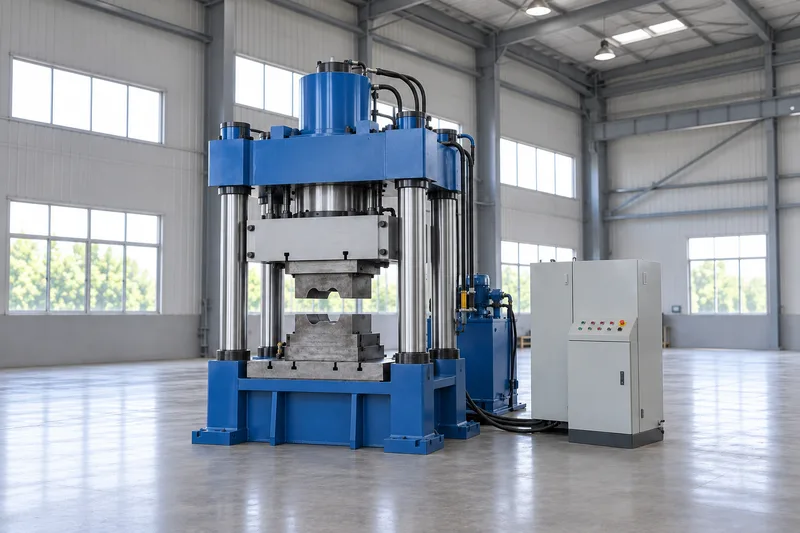
Closed-die does not automatically mean flashless
Impression-die forging can produce flash at the die parting line. Flashless arrangements are a separate tooling and stock-control decision; do not assume that the phrase “closed-die” promises no trimming or a finished tolerance. Specify the required finished geometry and let the component-specific review establish the blank and secondary operations.
Equipment families and supporting stages
| Stage or equipment | What the category explains | What still needs review |
|---|---|---|
| Stock preparation and heating | Prepare the selected stock for the agreed forming route. Schuler's published hammer-line example separately identifies a furnace and descaling stage. | Material condition, blank definition, heating method and handling interfaces. |
| Die-forging hammer | LASCO describes a hydraulic double-acting hammer as a die-forging unit. A hammer is one equipment family, not the only forging route. | Part geometry, die arrangement, handling and actual machine documentation. |
| Forging press | Schuler lists screw, mechanical and hydraulic press families alongside hammers for hot-forging systems. | Match the specific forming task and tooling; a generic press image supplies no machine rating. |
| Preforming, trimming or piercing | LASCO separately lists these functions for its multipurpose presses. Schuler's example also includes a deburring/sizing press. | Which features need a separate operation, and where it belongs in the approved sequence. |
| Secondary machining and treatment | The selected forging may still need finished interfaces and a specified material treatment. | Finished drawing, datums, holes, threads, properties and required records. |
The manufacturer resources illustrate possible equipment arrangements, not a mandatory factory layout. A furnace, hammer, press and trimming machine are not interchangeable descriptions. This page is not a machine operating procedure and gives no temperature, force, blow count, stroke, die-design or handling settings.
Use the rigging example within its limits
Crosby's 2023 shackle manufacturing discussion describes closed-die forging, accurate machining and quench-and-temper treatment for its own shackle constructions. It is a historical, named-manufacturer example, not a current FastenerBridge product specification or proof of an installed production line.
Identify a shackle body and its pin separately. Do not transfer the same route to every hook, eye, thimble, rope clip, turnbuckle or swivel assembly. A part may have different stock, formed features, machining or assembly requirements. The rigging product route overview keeps these construction distinctions together.
Send a finished-component brief
| Review topic | Information to provide |
|---|---|
| Part identity | Exact product reference or controlled drawing, revision and units; distinguish the body from pins, retainers and other assembly parts. |
| Finished geometry | Datums, dimensions and tolerances, holes, threads, mating surfaces and any specified surface or parting-line requirements. |
| Material and condition | Required grade, finished properties and treatment specification. List unresolved alternatives rather than inferring them from appearance. |
| Acceptance and traceability | Required inspection, material records, lot identification and any separately specified testing or qualification documents. |
| Order scope | Quantity by variant, sample-review requirements, packing, destination and requested date; feasibility and supply remain subject to quotation confirmation. |
Connect forging to the remaining operations
Use the CNC machining guide for finished drawing features and the heat-treatment guide for separate material-treatment review. Surface finishing and inspection and sorting address further supporting stages. The cold-heading guide is a different route, not a substitute for hot-forging documentation.
A forged shape, equipment photograph or dimensional check does not establish working-load limit, fatigue life, proof-test results, lifting qualification, certification or suitability for a lifting arrangement. No lifting selection or field operating advice is provided. Optical sorting cannot replace the separately specified material and mechanical acceptance evidence.
Related product and enquiry pages
Equipment guide, not a factory inventory
This page explains process categories. It is not evidence of factory ownership, installed machines, machine supply, production capacity, stock, certifications or a released manufacturing plan. Order-specific requirements and commercial facts must be confirmed separately.
Technical references and scope
These independent resources support qualitative process distinctions. No manufacturer model rating, numerical recipe, performance promise or commercial relationship is adopted.
- Open University — hot closed-die and flashless process distinctions (2017)
- LASCO — hydraulic die-forging hammer category
- LASCO — separate preforming, trimming and piercing functions
- Schuler — hot-forging equipment families
- Schuler — hammer-line example with separate peripheral stages (2017)
- Crosby — shackle manufacturing example (2023 catalogue, page 20)