Match each requirement to an inspection method
Inspection is not one interchangeable activity. Dimensional measurement, thread gauging, optical sorting and mechanical testing answer different questions. A camera station does not, by appearance alone, establish material properties, complete thread fit or conformity of a finished lot.
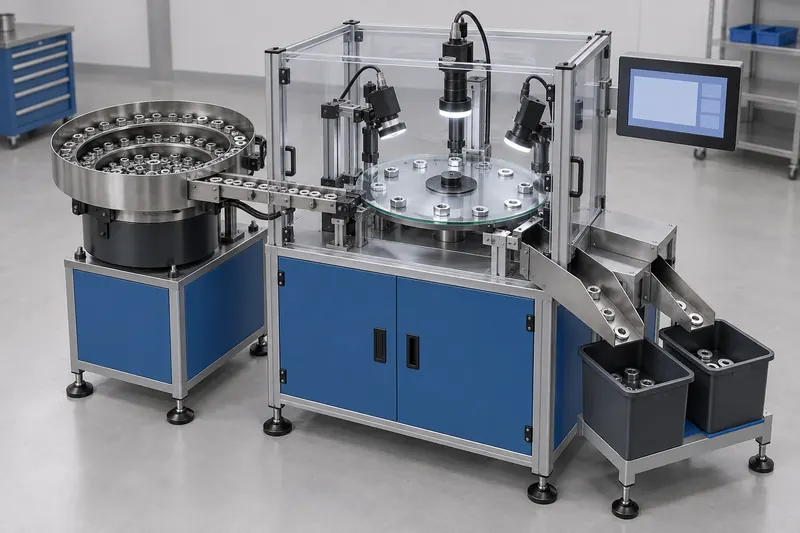
Optical inspection and sorting
General Inspection describes camera and lighting configurations for measuring selected dimensions and detecting visible defects on fasteners. Its systems and optional views differ for headed parts, nuts, washers and other geometries. Treat these as manufacturer examples, not specifications for the pictured station.
A sorting arrangement presents individual parts to the inspection area and routes them to separate outputs. Define the actual features, viewing surfaces, orientation and rejection criteria before selecting a configuration. A visible part outline is not evidence that every surface, hidden feature or internal defect has been checked.
Keep gauging and material tests separate
Dimensional checks
Choose the measurement method around the drawing datums and features. Confirm the method, calibration status, reference parts and reporting needs rather than adopting a generic precision claim from a machine brochure.
Thread acceptance
Agree the thread system, pitch, fit and required gauging method. GO/NO-GO checks are limit judgments; they are not a substitute for every individual dimensional measurement. An optical image of a thread is not automatically the specified functional gauging result.
Mechanical testing
Instron lists fastener-specific fixtures for proof, tensile, wedge, stripping and shear tests. The selected test and fixture must match the component and specified acceptance method. A camera-based sorting station is not a tensile testing machine, and a dimensional report does not establish strength.
Define what the inspection plan actually covers
- Identify the controlled drawing, specification and critical characteristics.
- Assign a method and acceptance criterion to each characteristic.
- Define sampling or individual-part checks for each agreed feature.
- Review reference parts, equipment checks and the separation of rejected parts.
- Agree lot identification and the records required for finished acceptance.
Inspecting an agreed feature on every presented part does not mean every possible defect has been eliminated. The coverage and limitations of the selected method must remain explicit; no universal zero-defect or inspection-speed claim is made.
Prepare an inspection and sorting brief
| Review point | Information to confirm |
|---|---|
| Part definition | Drawing revision, material, grade, finish and lot-identification requirements. |
| Critical features | Each characteristic, its acceptance criteria and the agreed inspection method. |
| Coverage | Sampling or individual-part checks, viewing surfaces, orientation and known method limitations. |
| Records and disposition | Required reports, equipment checks, rejected-part segregation and final lot identification. |
Connect the records to the delivered lot
Keep drawing revision, lot identification, method, results and disposition connected. Confirm how rejected material is segregated and how the final accepted quantity is identified. Where test reports are required, agree their scope before ordering.
Inspection follows the part-specific route, including machining, heat treatment and finishing, where applicable.
Request the finished fastener and its acceptance evidence
Provide the inspection requirements for review with the component. This guide does not establish installed metrology equipment, inspection capacity, accreditation, certification or actual test results.
Technical references
Independent equipment and technical resources. These references do not establish installed equipment or a commercial relationship.