Match the plastic component to its own process
Plastic injection moulding produces a component using a mould and a prepared polymer melt. Review the plug, support disc or other plastic part separately from its screw, nail or metal sleeve. The assembly name does not define one manufacturing route for all its components.
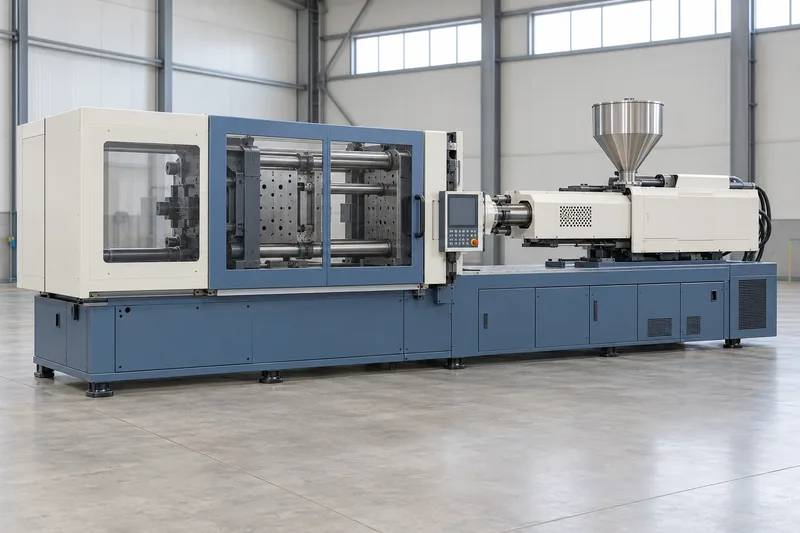
What the equipment does
| Function | Part-specific review |
|---|---|
| Material preparation and plasticising | Identify the exact resin grade, colour and permitted additives. Material preparation and the plasticising arrangement must suit that material. |
| Injection and mould filling | The injection unit delivers melt into the mould. Review the part geometry, feed system and complete filling of the required features. |
| Clamping and mould temperature control | The clamping unit supports mould opening and closing. Machine configuration, mould installation and temperature control are reviewed together. |
| Part removal and handling | Review removal, any sprue separation and subsequent handling. A robot or conveyor is an optional configuration, not proof of a particular production line. |
Cooling, mould opening and part removal are part of the moulding cycle. This overview does not specify machine settings or a cycle time. Use the actual equipment, mould and resin instructions with qualified personnel for operation and set-up.
A fixing example, not a universal specification
ARBURG describes injection moulding Fischer Greenline dowels, with automated part removal and sprue handling. This named example supports the distinction between moulding a plastic plug and producing a metal fixing component. Its resin, machine, tooling and process results must not be assigned to another plug or to FastenerBridge.
Fischer lists different plastic and metal insulation-support constructions. A plastic support disc is a candidate for component-specific moulding review; its material, geometry and assembly must be confirmed rather than inferred from that product-family name.
Separate moulding from assembly and approval
A moulded plug paired with a metal screw still needs separate component and assembly requirements. Insert moulding is another configuration: ENGEL describes machines arranged to overmould inserts, including vertical clamping arrangements. Do not assume every plastic-and-metal fixing is overmoulded, or that the horizontal equipment shown covers all configurations.
Manufacturing a plastic component does not establish substrate suitability, structural capacity, fire performance or approval of the fixing system. Those requirements belong to the exact product documents and responsible project review; this page provides no installation or load-design instructions.
Prepare a moulded-component enquiry
| Requirement | Information to provide |
|---|---|
| Controlled part definition | Component drawing and revision, dimensions, tolerances, holes, ribs, slots and mating interfaces. Identify plastic and metal components separately. |
| Material requirements | Exact resin designation and grade, colour, additives and any permitted recycled-content requirement. Do not replace the specified material without approval. |
| Mould and order scope | Existing mould or new-tooling requirement, agreed ownership and review points, quantity, samples and packing. Cavity count and production timing remain part-specific. |
| Finished-part acceptance | Agreed dimensional and appearance criteria, sample review, component identification and records. Define any system testing separately. |
Do not judge the part from the machine alone
ENGEL identifies incomplete mould filling and process variation as issues requiring assessment of material, tooling and production conditions. Request agreed acceptance criteria for the finished component rather than treating a machine photograph as quality evidence. No universal tolerance, scrap rate or output is promised here.
Related products and operations
Equipment category and order-specific records
This guide explains a possible component process. It is not an installed-machine inventory or proof of factory ownership, capacity, certification or supply availability. Send the finished-part requirements for review; any production route and commercial scope must be confirmed for the order.
Technical references
Independent manufacturer resources for the examples and process distinctions. They do not establish an installed machine or a commercial relationship.